
Florida is tough on screen mesh. Between the UV, salt air, humidity, and pool chemicals, most standard screening does not last as long as homeowners expect. Here is what is actually causing the damage.
Why Florida Is So Hard on Screen Mesh
No other state combines intense UV, coastal salt air, and year-round heat quite like South Florida. Affordable Screening Plus installs Phifer screens on every job specifically because standard mesh does not hold up here.
What Causes Screen Mesh to Fade and Break Down
Most Palm Beach County enclosures have more than one of these issues working at the same time. That is why mesh can go from fine to crumbling faster than you expect.
UV Radiation
Florida’s UV index is among the highest in the country. It breaks down the vinyl coating on mesh at a molecular level. Once that coating is gone, the fibres underneath become brittle and crumble instead of stretch.
Salt Air
If you live within a few miles of the coast, salt particles land on your mesh constantly. They strip away the protective coating on standard fiberglass. Bare fibres left exposed to sun and moisture degrade quickly after that.
Heat Expansion and Contraction
Mesh expands in the heat and contracts when it cools. Every day, all day. Over time, this fatigues the fibres at the spline and frame edges, which is usually where you first see mesh pulling away.
Humidity and Organic Growth
Florida’s humidity stays high for most of the year. That creates perfect conditions for mould, mildew, and algae to grow right on your mesh. Organic growth holds moisture against the fibres and accelerates breakdown from the inside out.
Pool Chemicals
Chlorine vapour rises from pool surfaces all year round. It breaks down vinyl coatings on standard mesh faster than UV alone would. If your enclosure surrounds a pool, expect a shorter replacement cycle than a patio-only setup.
Low-Grade Mesh From the Builder
Many enclosures are built with the cheapest mesh available to keep construction costs down. Thinner coatings and lower UV ratings mean it starts degrading within a few years rather than lasting a decade.
How Different Mesh Types Hold Up in Florida
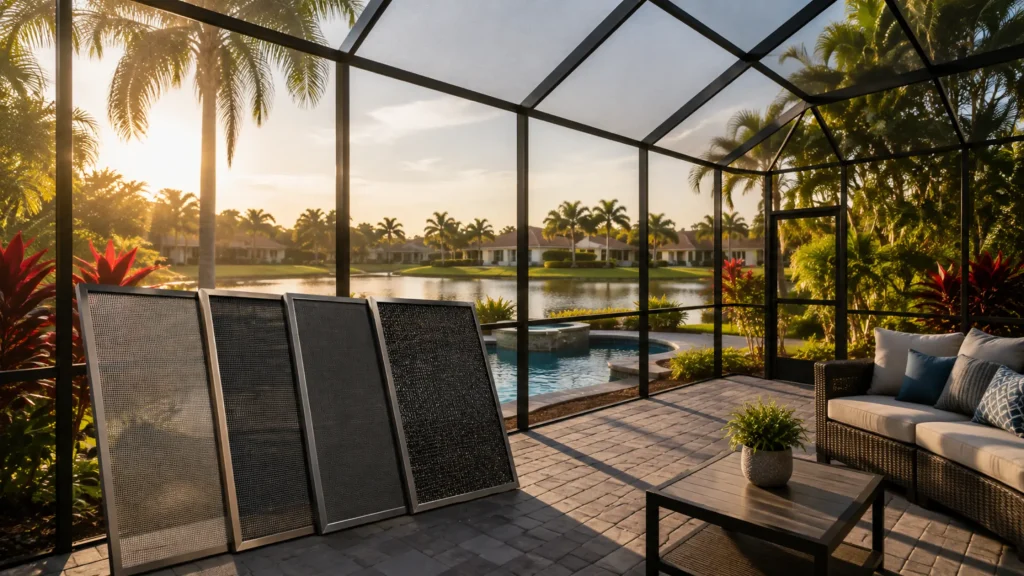
Not all mesh degrades at the same speed. Material quality makes a real difference in how long your enclosure goes before needing rescreening.
Standard Fiberglass
The most common option and the least durable in South Florida. Most standard fiberglass fades within three to five years and gets brittle enough to crumble at the edges within seven to ten.
Vinyl-Coated Polyester
Heavier and more tear-resistant than standard fiberglass. Still vulnerable to UV and chlorine over time, but thicker coating means it holds up longer under the same conditions.
Phifer Screen Mesh
Phifer builds UV stabilisers directly into the vinyl coating. It is designed for exactly the conditions Palm Beach County creates. Phifer mesh lasts significantly longer than standard alternatives and holds its colour and flexibility better throughout its lifespan.
Pet-Resistant and Heavy-Duty Mesh
Built with a thicker coating and tighter weave. Originally designed for homes with pets, but the extra material weight also gives it better resistance to UV and salt air. A practical upgrade for any Florida enclosure regardless of whether you have pets.
How to Slow Down the Damage
Good maintenance habits will not stop degradation completely, but they add years to the life of any mesh.
Wash the Screens Once a Year
Salt, pool residue, and organic debris sit on the mesh and speed up the breakdown process. A simple rinse with mild soap and a soft brush removes surface build-up before it works deeper into the weave.
Keep Plants Away From the Frame
Vegetation touching or overhanging the enclosure holds moisture against the mesh. Keeping a gap between plants and the frame reduces the sustained damp conditions that mould and algae need to grow.
Fix Small Tears Straight Away
A small tear lets UV and moisture into the raw fibre edges. From there, damage spreads outward fast. Catching screen damage early saves you from a full panel replacement later.
Choose Quality Mesh From the Start
The single most effective thing you can do is specify a quality mesh at installation. Paying a little more upfront for Phifer or heavy-duty screening adds years to the replacement cycle in Florida’s climate.
Screen Mesh Comparison for Florida Conditions
| Mesh Type | Typical Lifespan in South Florida | UV Resistance | Best For |
| Standard fiberglass | 3 to 7 years | Low | Budget installs |
| Vinyl-coated polyester | 5 to 10 years | Moderate | General residential |
| Phifer screen mesh | 10 to 15 years | High | Coastal and pool enclosures |
| Pet-resistant heavy-duty | 8 to 12 years | Moderate to high | Homes with pets, exposed panels |
Conclusion
Florida’s climate is genuinely hard on screen mesh. UV, salt air, humidity, and pool chemicals all work against it at the same time. The best protection is choosing the right mesh from the start and keeping up with basic annual maintenance.
People Also Ask
How long should screen mesh last in Florida?
Quality mesh in South Florida lasts around seven to twelve years. Standard-grade mesh in coastal Palm Beach County often needs replacing within five to seven. A lot depends on how close you are to the coast and whether the enclosure surrounds a pool. Read more about how long a screen enclosure should last.
Can faded mesh still keep insects out?
Fading alone does not immediately create gaps, but it is a sign that the mesh is breaking down. Once it starts crumbling at the edges or along the frame, the insect barrier is compromised and replacement is overdue.
Is it worth rescreening an older enclosure?
If the frame is solid with no major corrosion or structural damage, yes. Rescreening costs far less than a full replacement and gives the enclosure years of extra life. The frame condition is what matters, not the age alone.
Does which way the enclosure faces affect how fast the mesh fades?
Yes. South and west-facing panels get the most direct sun during peak UV hours. They fade and become brittle faster than panels on the north or east side of the same structure. Upgrading to a higher-grade mesh on those panels is a practical way to even out the wear.
Can mosquitoes get through damaged mesh?
Once mesh develops micro-tears or pulls away from the frame, smaller insects get through easily. Stopping mosquitoes getting into your screened patio starts with keeping the mesh intact and replacing it before gaps form.